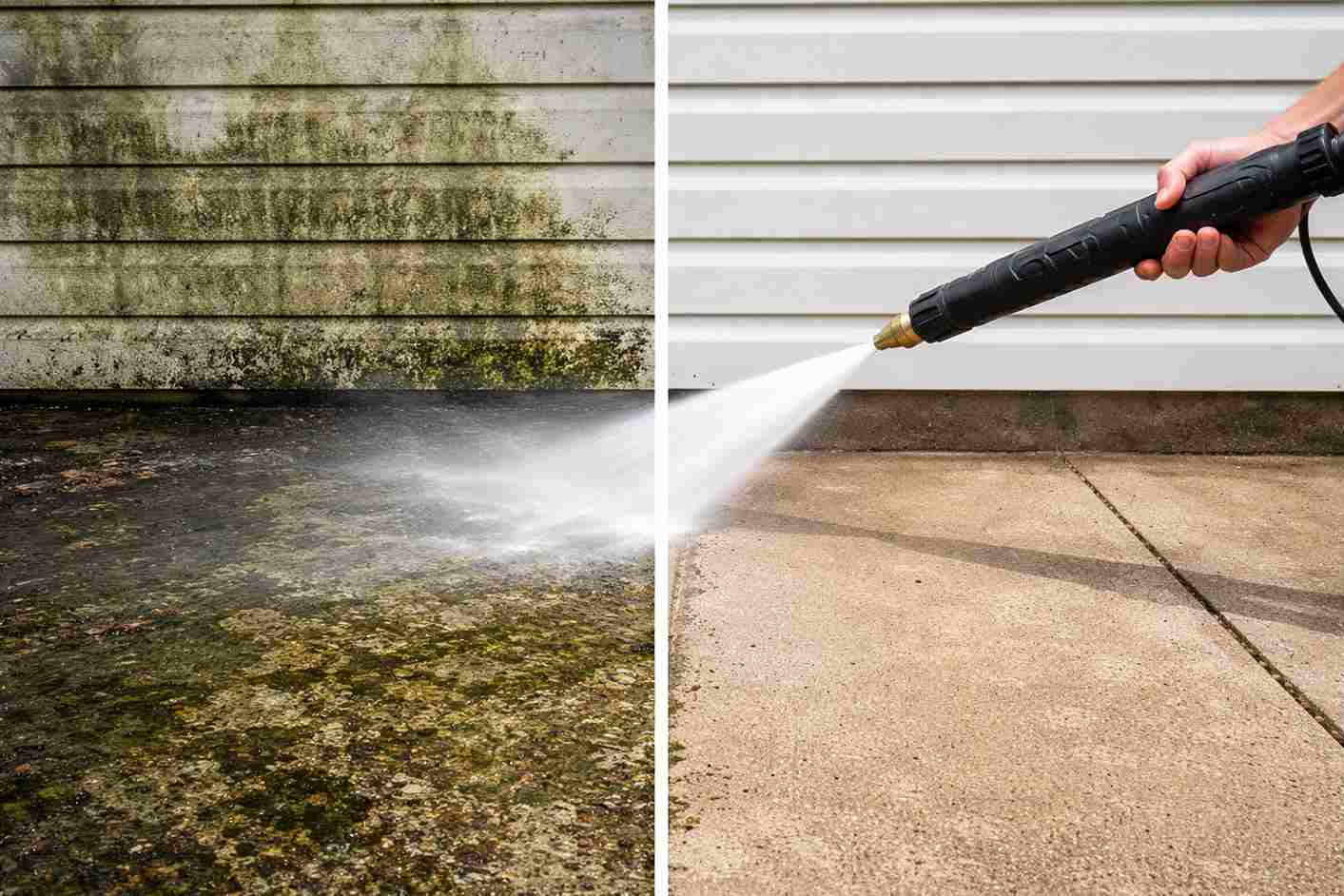

Pressure washing can help remove mold and mildew from exterior surfaces. However, it is not always a complete or long-term solution. The high-pressure water can strip away visible growth. However, it may not remove spores deep in porous surfaces like wood or concrete.
Key Takeaways
- Pressure washing mold gets rid of growth on the surface, but not the roots.
- The type of surface and the way you clean it affect how well mildew comes off.
- Washing the house is safer for painted and siding surfaces.
- Chemical treatments can keep mold under control for a long time.
- Professional services lower the danger of harm to surfaces
Mold and Mildew Removal: How Pressure Washing Restores Your Surfaces
Mold and mildew love wet conditions and organic matter that is left on outside surfaces. Pressure washing mold uses the force of water to get rid of apparent growth. This works well on hard surfaces like concrete, brick, and stone.
Removing mildew is not the same as removing mold. Mildew usually grows in a flat way and is easier to get rid of with some pressure. Mold commonly penetrates porous materials, so washing alone isn’t enough. These surfaces also need chemical treatment.
House washing systems use cleaning products and low-pressure application together. This method protects surfaces while removing mildew effectively. This guide offers tips on safe exterior cleaning methods.
How to Get Rid of Mold and Mildew with Pressure Washing
Pressure washing gets rid of mold by disrupting the link between spores and surfaces. High-pressure water removes apparent colonies. But it doesn’t always get rid of the growth underneath.
Important things that affect how well it works:
- Porosity of the surface
- Level of water pressure
- Used cleaning solution
- Length of time exposed
If you don’t use detergent, pressure washing mold may leave spores behind. This can lead to regrowth in a matter of weeks. Studies show that exterior mold often needs chemical treatment to prevent regrowth.
Pressure Washing and House Washing for Getting Rid of Mold
Washing a house is different from regular pressure washing. It employs less pressure and specific cleansers made for organic growth.
Table of Comparison
| Method | Pressure Level | Best For | Mold Regrowth Risk |
| Pressure Washing | High | Concrete, stone, brick | Moderate |
| House Washing | Low | Vinyl siding, wood, stucco | Less |
| Manual Scrubbing | None | Small affected areas | Low |
Washing your house lowers the risk of harm to the surface and makes it easier to get rid of mildew. It’s often recommended for painted or older exterior surfaces.
Surfaces That Are Good for Pressure Washing Mold
Not all surfaces work well when you use pressure washing to get rid of mold. Hard, non-porous materials can handle higher pressure without breaking.
Good surfaces include:
- Sidewalks and driveways
- Pavers and walls that hold things up
- Brick walls
- Concrete surfaces for businesses
- Surfaces that aren’t good:
- Shingles made of asphalt
- Decking made of softwood
- Older vinyl siding
- Wood surfaces that have been painted
Low-pressure home washing is safer and works better on certain materials.
How Cleaning Solutions Help Control Mold
Having high water pressure alone won’t kill mold spores. Cleaning products break down mold and kill leftover spores. To get rid of mildew better, several professional services use treatments before rinsing.
Experts recommend combining mechanical and chemical cleaning for lasting mold control. Clearvue Exterior Cleaning Services uses surface-safe procedures. They focus on cleaning with controlled pressure and solutions instead of just force.
Safety and Eco-Friendly Practices
If you don’t do it right, pressure washing might release spores into the air or damage plants nearby. Controlled use of regulated detergents is gentler on the environment.
Some safety practices are:
- Testing the surface before washing it all.
- Management of controlled runoff
- Safety gear for workers
Professional cleaners follow building maintenance best practices.
Frequently Asked Questions
- Does pressure washing get rid of mold for good?
No. Pressure washing mold gets rid of visible growth. But it doesn’t always get rid of spores without using chemicals.
- Is it safer to get rid of mildew by cleaning the house?
Yes, house washing utilizes less pressure, which lowers the chance of harm to surfaces.
- How often is exterior house cleaning needed?
Most exteriors need to be cleaned every 12 to 24 months, depending on the weather and how much sun they get.
- Does pressure washing hurt siding?
Siding can be damaged by high pressure. It is best to wash your house with low pressure.
- Do you need cleaning solutions?
Yes. Solutions help control mold and slow its growth.