
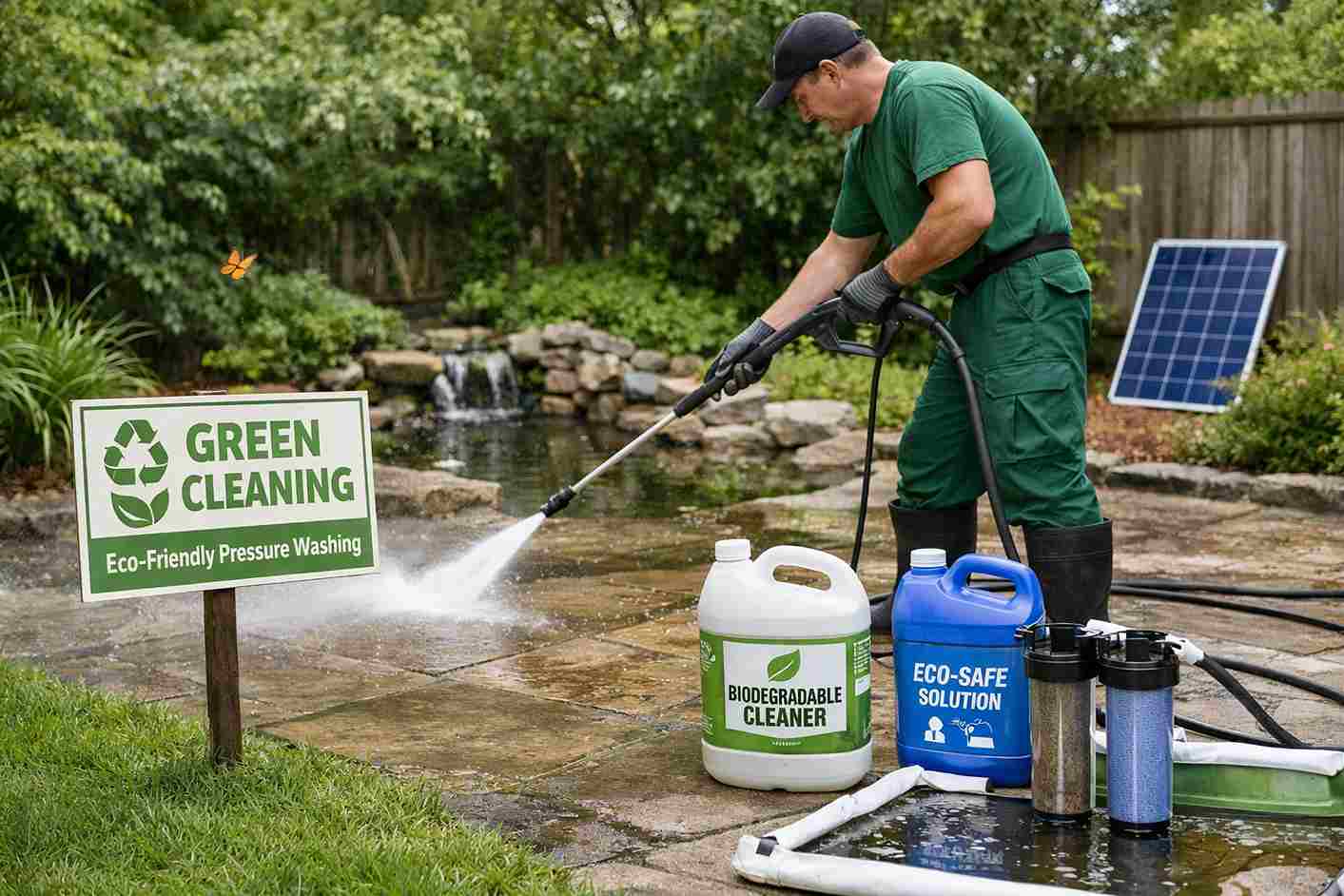

Pressure washing can be environmentally friendly when done responsibly. Using biodegradable detergents, managing runoff, and using proper equipment lets homeowners clean effectively. These methods help minimize waste and protect soil, plants, and local waterways. The right approach makes pressure washing eco-friendly and effective.
Key Takeaways
- It is possible to pressure wash in a way that is good for the environment if you keep an eye on how much water you use.
- Detergents that break down naturally have less of an effect on soil and water.
- Taking care of wastewater properly keeps storm drains from getting dirty.
- Eco-friendly pressure washing reduces environmental risks.
- Local laws may demand that runoff be contained and disposed of properly.
Eco-Friendly Pressure Washing: Safe and Effective Cleaning
Eco-friendly pressure washing aims to use less water and fewer toxic chemicals. It also prevents dirty water from entering storm drains. Done right, it removes dirt, mold, and algae without harming the environment.
Water efficiency is a big deal. High-efficiency pressure washers clean better than hoses, using less water. The EPA’s stormwater program stresses keeping dirty runoff out of waterways.
Detergents that break down in the environment are also quite important. Many green cleaning companies use biodegradable, phosphate-free solutions. The EPA Safer Choice program certifies safer, eco-friendly cleaning products.
Water Use and Conservation Practices
Water usage is a common concern with power washing services. For efficiency, modern commercial-grade machines control flow rates and pressure levels. Operators change the pressure to match the type of surface, which cuts down on water use that isn’t needed.
Here are some best practices:
- Using trigger guns to halt the flow of water when not cleaning
- Choosing nozzles that are made for certain surfaces
- Cleaning when it’s dry to keep runoff under control
- Not letting water go out all the time
Pressure washing often uses less water than a hose due to efficiency.
Eco-Friendly Chemicals and Biodegradable Solutions
Some traditional cleaners contain phosphates, bleach, or solvents that harm soil and water. Eco-friendly pressure washing lowers this danger by:
- Using soaps that break down in the environment
- Using cleaning products in the right proportions
- Not spraying too much
- Planning pre-treatment to use fewer chemicals
EPA resources show how to keep pollutants out of waterways. They describe how pollutants flow through stormwater systems. Green cleaning services often use environmentally safe materials.
Managing Wastewater and Controlling Runoff
Pressure washing can leave oil, grease, mold, metals, and chemicals in wastewater. Keeping things in the right place keeps storm drains from getting dirty.
To control runoff well, you need:
- Before cleaning, block neighboring storm drains
- Using recovery or vacuum systems
- When allowed, sending wastewater to sanitary sewage systems
- Removing trash before throwing it away
Stormwater standards show how runoff harms rivers, lakes, and coasts. Professional power washing services usually follow local rules to manage wastewater.
Targeted Surface Cleaning Minimizes Environmental Impact
Choosing the right amount of pressure keeps structures from being damaged. Damaged materials increase waste when repaired or replaced.
Some examples are:
- Low-pressure washing for painted and siding surfaces
- Soft cleaning for roofing materials
- Controlled pressure for concrete surfaces
Tailoring the procedure to the material reduces long-term environmental impact. This article offers tips for preventive maintenance to extend surface life.
Clearvue Exterior Cleaning Services uses organized, eco-friendly methods for cleaning building exteriors. These methods work effectively on a variety of surfaces.
Compliance and Regulatory Issues
Different cities have different rules about protecting the environment. People who do eco-friendly pressure washing should know:
- Requirements for stormwater discharge
- Rules for getting rid of wastewater
- Rules for storing chemicals
- Rules for protecting the environment
Compliance lowers liability and protects ecosystems nearby.
Frequently Asked Questions
1. Can pressure washing make storm drains dirty?
Yes, if not properly contained, wastewater can get into storm drains. Following the EPA’s rules for stormwater lowers this danger.
2. Does eco-friendly pressure washing use less water?
Yes, most of the time. Compared to cleaning with a hose, using efficient equipment can reduce water usage. Regulated flow systems further help cut down on water waste.
3. Do biodegradable detergents work?
Yes. Many biodegradable detergents remove dirt, algae, and mold effectively. They do so without leaving harmful chemicals behind.
4. Do you need permission to use power cleaning services?
Some places need permits or specific ways to get rid of wastewater. Requirements differ depending on where you are.
5. Is soft washing better for the environment?
When done right, soft washing can protect surfaces from harm and cut down on the need for too many chemicals. It also reduces water waste compared to traditional high-pressure cleaning methods.