
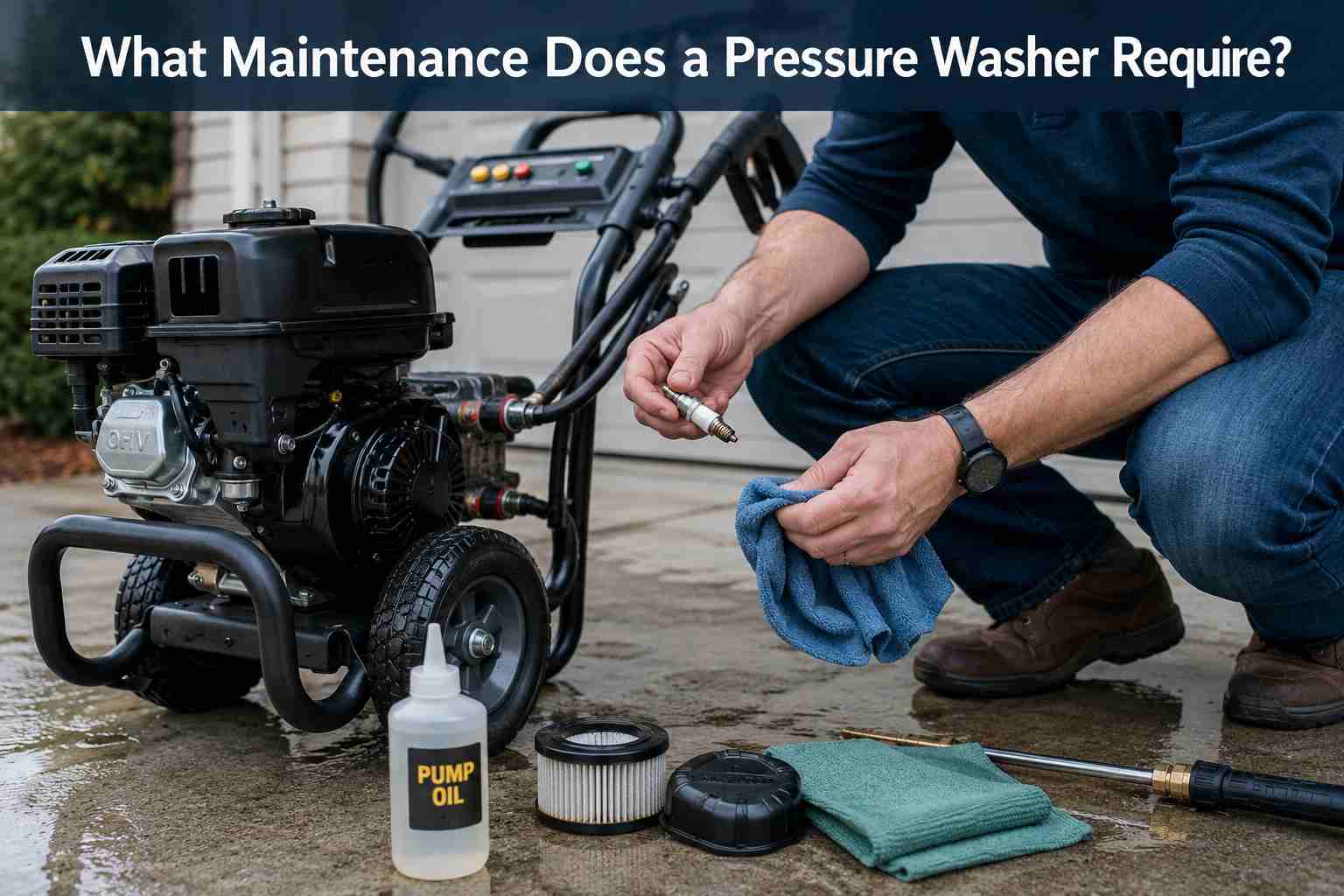

To keep a pressure washer running smoothly, regular inspections and cleaning are essential. Worn-out parts should also be replaced as needed. Regular upkeep lowers the likelihood of equipment failure. It also extends the equipment’s lifespan for both home and business cleaning. Maintenance depends on usage and conditions.
Key Takeaways
- Regular inspections keep parts from breaking down too soon.
- Cleaning filters and nozzles makes the pressure more stable.
- Storing things properly keeps pumps and hoses from breaking.
- Following the manufacturer’s instructions simplifies pressure washer care.
- Power washing tips help make sure it’s safe to use.
Pressure Washer Maintenance Tips for Optimal Performance
To keep a pressure washer running smoothly, its key parts should be checked regularly. They should also be cleaned to ensure proper performance.
- To ensure proper water flow, examine the hoses, spray nozzles, seals, and connectors. This also helps prevent leaks.
- Flushing the system is also important in pressure washer maintenance. After each use, the system should be cleaned to remove soap residue. This prevents buildup that could affect pump performance.
- This pressure washing maintenance guide provides systematic advice. It focuses on caring for and inspecting exterior cleaning systems.
- These pressure washer safety recommendations reinforce proper handling requirements. They also emphasize using the equipment correctly to avoid hazards.
If maintenance is neglected, equipment performance may decline, and pressure may become inconsistent. It can also lead to higher repair costs over time.
Schedule for Regular Inspections
A systematic inspection program makes sure that equipment will work well for a long time. Weekly checks should look for apparent wear and make sure the machine is ready to work. Monthly checks should look at deeper mechanical parts.
Important places to check are:
- Condition and flexibility of the hose
- Cleanliness of the nozzle and the spray pattern
- How well the pump works and how stable it is
- Condition of the filter and obstruction
It is also a good idea to do seasonal maintenance to fix wear and tear from long-term use and being outside.
ClearVue can support this process through professional pressure washing services. They also offer routine exterior maintenance solutions. Their trained team helps ensure surfaces and equipment are properly cleaned.
This reduces buildup that can affect performance. They are also known for reliable inspection support. This helps identify issues early and maintain consistent results.
How to Clean and Store
How well you clean and store your pressure washer affects how well it works. You should flush the system after each usage to get rid of dirt and detergent. To keep things from building up, you should also wipe off the outside pieces.
Some ways to store things are:
- Storing the unit in a dry, sheltered location.
- Coiling hoses without making sharp turns
- Keeping moisture away from electrical parts
These methods reduce the risk of corrosion. They also help extend equipment lifespan, especially during long periods of non-use.
Problems with Pressure Washers and How to Avoid Them
Pressure washer problems often result from poor maintenance. Low-pressure production, overheating, and clogged nozzles are all common concerns. Some ways to stop this from happening are:
- Cleaning the nozzle often
- Using clean water sources
- Changing out old seals and O-rings
Proper care reduces stress on pressure washer parts. It also improves long-term reliability.
Tips for Pressure Washing and Staying Safe
Taking care of your pressure washer means using it safely. Users should always wear safety gear and make sure their footing is firm when using it. People, animals, or electrical parts should never be hit by high-pressure streams.
Some of the checks that are done during operations are:
- Checking wires and plugs before using them
- Making sure that electric units are properly grounded
- Checking the pressure settings before using
The pressure washer overview provides more technical information. It also explains how the system works and includes general safety tips.
Frequently Asked Questions
1. What kind of care does a pressure washer need?
Maintenance includes checking hoses, cleaning filters, and checking the oil. It also involves flushing the system after each use.
2. How often should maintenance be done?
Before each use, basic checks should be done. Full service should be done once a month or once a season, depending on how often the item is used.
3. What are some frequent blunders people make when caring for things?
Some common mistakes include not clearing nozzle clogs and skipping system flushing. Another is using unfiltered water.
4. Can maintenance make things last longer?
Yes. Proper maintenance increases equipment lifespan. It does this by reducing wear and preventing damage.