
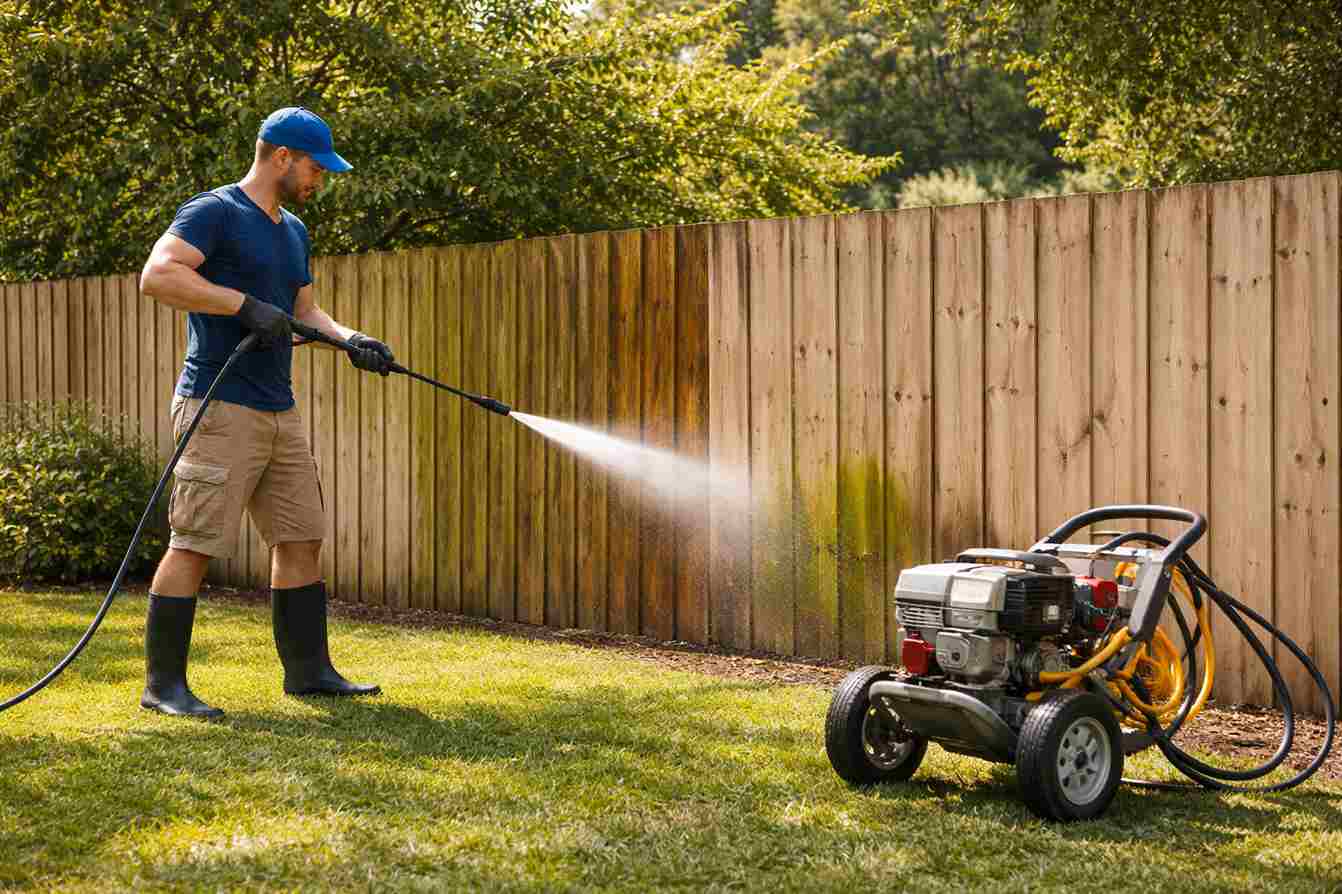

Pressure washing efficiently removes dirt, mold, and grime from wood or vinyl fences. The right pressure and nozzle help protect the fence from damage while cleaning.
Using a proper cleaning solution helps loosen stubborn stains. These stains can then be effectively rinsed away with a pressure washer. Proper technique lets a pressure washer quickly and safely restore your fence.
Key Takeaways
- Adjust the pressure and nozzle for the fence type.
- Prepare the area and protect nearby plants.
- Use a cleaning solution for tough stains.
- Wash consistently and rinse thoroughly.
- Hire a professional for large or tricky fences.
Fence Cleaning Tips: Keep Your Wood and Vinyl Looking New
Different materials need different ways to clean a fence. Vinyl is more durable, but it still needs to be washed well. Wood is more porous and sensitive to pressure.
For fences made of wood:
- Use 500 to 1,200 PSI.
- Choose a nozzle with a 25 or 40 degree angle.
- Spray with the grain.
- Keep the wand at least 12 to 18 inches away.
For fences made of vinyl:
- Use 1,300 to 1,600 PSI.
- Use a nozzle with a 25-degree angle.
- Spray evenly from the top to the bottom.
- Don’t push water under panels.
If you exert too much pressure, it might gouge or tear off protective coatings. Lower PSI settings are safer for soft surfaces.
How to Clean Fences with a Pressure Washer in Steps
Step 1: Look at the fence
Look for:
- Loose boards
- Cracks
- Nails or screws that are poking out
- Mold or algae growth
Before pressure washing fence sections, repairs should be done to stop more damage.
Step 2: Get the area ready
- Take out any plants or furniture that are close to the fence.
- Put plastic sheeting over fragile plants.
- Shut the windows that are close by.
Preparation keeps water from getting in and stops harm to nearby locations.
Step 3: Use a cleaning solution if you need to.
Use a cleaning solution that is suitable for fences to get rid of mold or mildew. Let it sit for 5 to 10 minutes, but don’t let it dry all the way. The EPA advises safe ways to remove mold from outdoor surfaces.
Step 4: Pick the Right Nozzle and Pressure
- Begin with a spray tip that is broader (40 degrees).
- Check the pressure on a small, hidden area.
- If you need to, slowly change the PSI.
Stay away from tips that are zero degrees since they put more pressure on the tip and make it more likely to break.
Step 5: Start washing
- Keep the wand at the same angle.
- Make steady, overlapping strokes.
- Do your work in parts.
- Spray from the top down.
To avoid streaks on wood, follow the grain. For vinyl, make smooth horizontal passes.
Step 6: Give it a good rinse.
Get rid of all the soap residue. Residue left behind can attract dirt or change the color of the surface. Wait 24 to 48 hours for the fence to dry before putting on stain or sealer.
When to Think About Getting Help from a Professional
Professional tools and knowledge may be needed for big properties or fences with a lot of stains. Trained technicians know how to control pressure, use cleaning chemicals, and protect surfaces.
Clearvue Exterior Cleaning Services cleans the outside of homes, including fences. They use controlled pressure and follow safety rules.
List of Tools Needed for Cleaning a Fence
Before you start, get:
- A pressure washer, either electric or gas
- Nozzle tips for 25 and 40 degrees
- Hose for the garden
- Cleaning solution (if you need it)
- Gloves and eyewear that protect
- Plastic sheets to protect plants
Electric variants are usually good enough for cleaning fences around the house. You can utilize gas models on bigger areas, but you have to be careful about how much pressure you set. This article explains how various methods affect different materials.
Frequently Asked Questions
1. Is it possible to harm a wood fence with pressure washing?
Yes. Too much PSI or holding the nozzle too near can break wood or leave marks that are easy to see. Always try a small area initially.
2. Do I need soap to clean my fence?
Not all the time. You may get rid of light dirt with just water. You could need a cleaning solution if there is mold, mildew, or severe stains.
3. How much PSI is safe for pressure washing fences?
Most of the time, wood fences need between 500 and 1,200 PSI. Vinyl fences might be able to handle 1,300 to 1,600 PSI.
4. Do I need to sand the fence after pressure washing?
If the wood fibers are still sticking up after drying, you may need to sand them down. This happens a lot with older wood.
5. How long should I wait before putting stain on a fence?
Wait 24 to 48 hours after washing to make sure the surface is totally dry.